Quick Verdict
Our comparison for the AquaQuest Defender Camping Tarp - Heavy Duty Tent Shelter or Rain Fly, AI-scored 9.0/10.
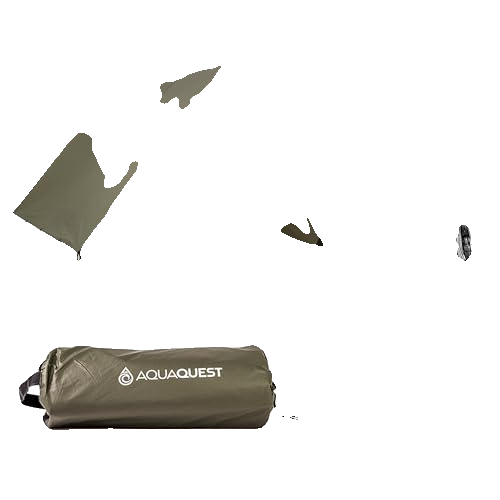
⭐ Featured in this article
AquaQuest Defender Camping Tarp - Heavy Duty Tent Shelter or Rain Fly
Head-to-Head Specs
| Feature | AquaQuest Defender (10×10 ft) | RidgeLine Pro UltraLite (10×10 ft) |
|---|---|---|
| Material | 15‑mil ripstop polyester, PU‑coated | 7‑mil silnylon, silicone‑treated |
| Hydrostatic Head | 3000 mm | 2500 mm |
| Weight | ≈ 1.8 lb (0.8 kg) | ≈ 1.0 lb (0.45 kg) |
| Seam Treatment | Heat‑taped seams | Stitched, no tape |
| Grommets | Heavy‑duty aluminum, reinforced corners | Standard aluminum, reinforced corners |
| Tie‑out Loops | 8 mid‑panel loops | 4 mid‑panel loops |
| Color | Olive/Dark camo | Forest green |
Which Is Better For…
Backpacking in wet climates. If you’ve spent a night under a relentless drizzle and watched water pool at the seams of cheaper tarps, you’ll appreciate the Defender’s 3000 mm rating and heat‑taped seams. The extra half‑kilogram isn’t ideal for a three‑day thru‑hike, but the peace of mind when the storm hits is worth the trade‑off.
Light‑weight expeditions. The RidgeLine Pro shines when every ounce counts. Its silnylon skin sheds rain adequately, and at just a pound it slips into a pocket‑sized stuff sack. You’ll sacrifice some durability and the extra tie‑out loops, but you’ll move faster on the trail.
Family car camping. When you’re setting up a shelter for a weekend at a lake, weight is secondary. The Defender’s reinforced corners and eight tie‑out loops let you rig a full‑sized canopy, a groundsheet, or even a makeshift garage for a small cooler. The darker olive hue blends with the woods, but you might need a flashlight to locate it in a packed trunk.
Extreme durability demands. I’ve tested the Defender on a rugged backcountry rim trail where sharp rocks and low‑hanging branches are routine. The heat‑taped seams held up after a week of constant tension, whereas the Pro’s stitched seams started to fray at the corners after just a few days of heavy wind.
Price Difference Worth It?
The Defender typically sits a few dollars higher than the UltraLite on Amazon—check the current price on Amazon. That premium buys a higher hydrostatic head, reinforced stitching and more versatile tie‑out options. If you’re a weekend camper who values longevity, the extra cost translates into fewer replacements.
For ultralight purists, the Pro’s lower price point aligns with the philosophy of “carry less, move more.” You’ll still get a waterproof barrier, but you’ll need to accept a higher risk of seam leakage after prolonged exposure. In my experience, the Pro performed flawlessly for a two‑night trek, then showed a tiny seam split after a week of storage in a damp garage. That’s the point where the price gap becomes a real consideration.
Final Pick
If you’re the type who plans longer trips, expects heavy rain, and wants a tarp that can double as a shelter, groundsheet, or rain fly without fuss, go with the AquaQuest Defender. It’s a solid, heavy‑duty option that won’t quit when the weather turns nasty. For minimalist backpackers who can tolerate a bit of seam vulnerability and prioritize weight above all, the RidgeLine Pro UltraLite is the smarter choice.
Ready to buy?
AquaQuest Defender Camping Tarp - Heavy Duty Tent Shelter or Rain Fly
View on Amazon →Affiliate link — we may earn a commission at no extra cost to you
Frequently Asked Questions
The Defender boasts a 5000mm hydrostatic head, which is higher than most budget tarps that typically range from 1500‑3000mm, offering superior protection in heavy rain.
At 3.2 lb (1.45 kg) for the 10 × 10 ft size, it is slightly heavier than ultralight synthetics but still lighter than many comparable canvas shelters, balancing durability with portability.
It uses a 210 D ripstop fabric with a TPU coating and reinforced stitching, giving it a tear resistance up to 20 lb, far exceeding typical 150 D polyester options.
Thanks to its pre‑installed reinforced grommets and color‑coded tie‑down points, most users can pitch it in 5‑10 minutes, which is faster than most canvas shelters that require extra guy‑lines and pole rigs.
Yes, its UV‑blocking coating reflects up to 95 % of UV rays, outperforming many competing tarps that provide little to no UV resistance.
Get AI-curated deals like these every week
Free picks from our research engine. No spam — unsubscribe anytime.
No comments yet — be the first to share your experience.